


When shopping for a dzi bead necklace, separate what you can see from what a seller can document. An eye-pattern design is a visible feature. Material, manufacture, age and origin are different questions, each requiring its own evidence. A photograph and a name do not answer all of them.
What does “dzi-style” mean at Kailash Zen?
We use dzi-style to describe the visual design of our Inner Compass necklace: a dark elongated focal bead with contrasting cream-colored eye and geometric markings. It is offered as contemporary symbolic jewelry. The description does not authenticate an antique bead, identify a mineral or establish a Tibetan place of manufacture.
This distinction helps you shop for the purpose you actually have. Someone drawn to a pattern and someone collecting historically documented beads need different information. If you are shopping as a collector, request documentation appropriate to the specific age and provenance claim.
A closer look at Inner Compass
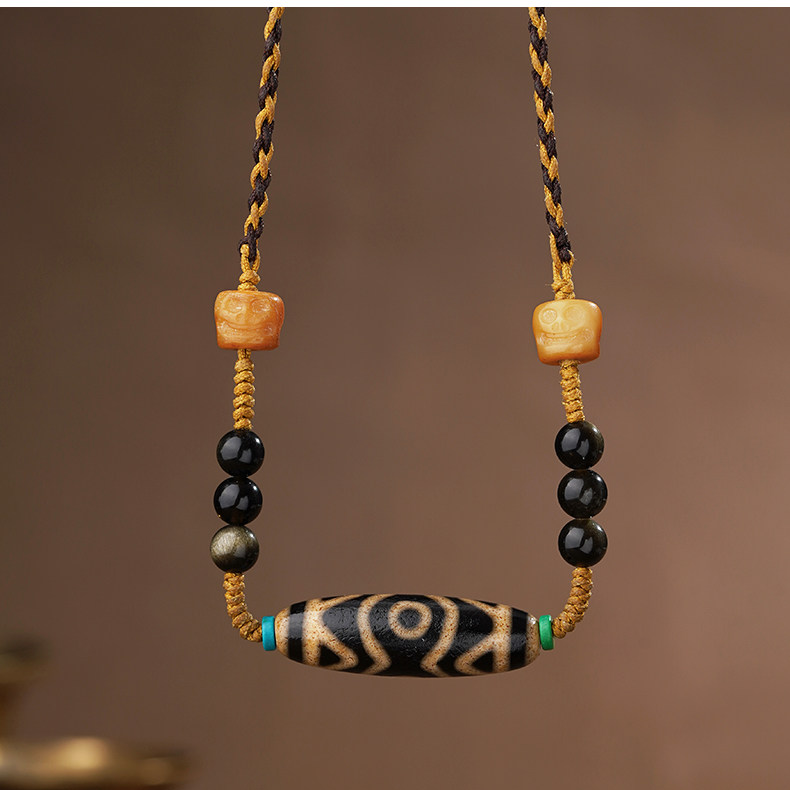
In the front-view photograph, the elongated bead establishes a horizontal line. Small turquoise-blue accents sit near its ends, while the darker round beads lead the eye toward the cord. These observations describe shape and color. “Turquoise-blue” is a color description, not a statement that those accents are turquoise.
Four questions to ask before buying
- What is being described? Ask whether the name identifies a visual style, a documented material, an origin or an age.
- What supports the material claim? Ask which parts were assessed and whether the evidence refers to the exact item or batch.
- What will arrive? Compare the focal bead, side accents, cord and decorative ends with the current listing. Similar-looking designs can have different components.
- How will it fit? Ask for usable length, the adjustment range and the size of the focal bead. A model photograph is useful for styling but is not a measurement.
Pattern, tradition and personal meaning
Traditional imagery deserves more than a sales promise. Our cultural guide introduces Tibetan visual references with further reading. It also distinguishes those references from the contemporary associations we suggest as a brand.
For Inner Compass, the suggested meaning is personal direction: choose a word such as patience or curiosity and let noticing the necklace remind you of it. This is an optional way of relating to the piece, not a claim that wearing it changes external events.
Can a photo establish authenticity?
A photo can help you inspect the visible pattern and arrangement. It cannot, by itself, substantiate a claim about mineral composition, treatment, age or provenance. Ask for the evidence behind the exact claim that matters to you.
Choosing for style
If the appeal is the design, start with a neckline that leaves room around the focal bead. The current gallery shows Inner Compass over a white top, where the dark pattern reads clearly. Explore our symbolic necklaces or contact us about fit and the details you need before ordering.