


Choose meditation beads by the practice you want to return to, then compare the complete strand rather than a beautiful bead in isolation. Count, handling, length, construction and decorative endings answer different questions. A clear listing should help you separate them.
A personal intention can be simple: to listen before replying, begin one task deliberately or close the day with care. Kailash Zen calls that invitation Return to what matters. Beads can be a familiar cue for a practice you choose; the object does not promise the feeling or result.
Start with the use you actually have in mind
For an established religious practice, begin with the instructions you follow. Required counts, handling and acceptable materials can vary. Confirm them with a suitable teacher rather than using a shop's poetic name as instruction. For an optional everyday pause, you may prefer a short visible section, a supported strand or a bracelet chosen as an intention reminder.
These uses have different practical needs. A strand held during recitation needs a construction and count suited to that practice. A piece worn near a collar needs an appropriate complete length and ending. A bracelet needs a comfortable wrist fit. One attractive coiled photograph does not establish all three.
Read what the number includes
Malas are associated with prayer and repeated recitation, and 108 is a familiar count in discussions of longer malas. Shorter and differently arranged prayer beads also exist. The Rubin Museum's Count Your Blessings exhibition offers examples across several Asian Buddhist traditions. Our mala meaning and bead-count guide explains the distinction between a traditional practice object and contemporary jewelry.
Ask what has been counted: main beads, spacers, a junction bead, a pendant and separate tails may be recorded differently. A supplier's “108 + 6” specification needs its breakdown. It does not automatically mean 114 counting beads or a strand that suits every practice. Read our guide to a 108 plus 6 listing before comparing two arrangements.
Compare the complete piece in this order
| Question | What to compare | Why it changes the choice |
|---|---|---|
| What will I do with it? | Supported handling, recitation or wearing | The same strand may not suit every arrangement. |
| What will I notice? | Round, disc, barrel, oval or textured forms | Shape changes the visual sequence and the way a complete piece sits. |
| What does its length describe? | Main strand, complete circumference, drop or tail | A full strand measurement is not a guaranteed wrist size. |
| How is it held together? | Elastic, fixed cord or a specified adjustment | Stretch and adjustment are different mechanisms. |
| What finishes the strand? | Pendants, side tassels, junctions and beaded tails | Separate parts need clearance and support. |
| What is known about the materials? | Supplier descriptions, disclosed treatments and verification limits | Appearance alone cannot confirm identity or origin. |
Choose a visual sequence you want to return to
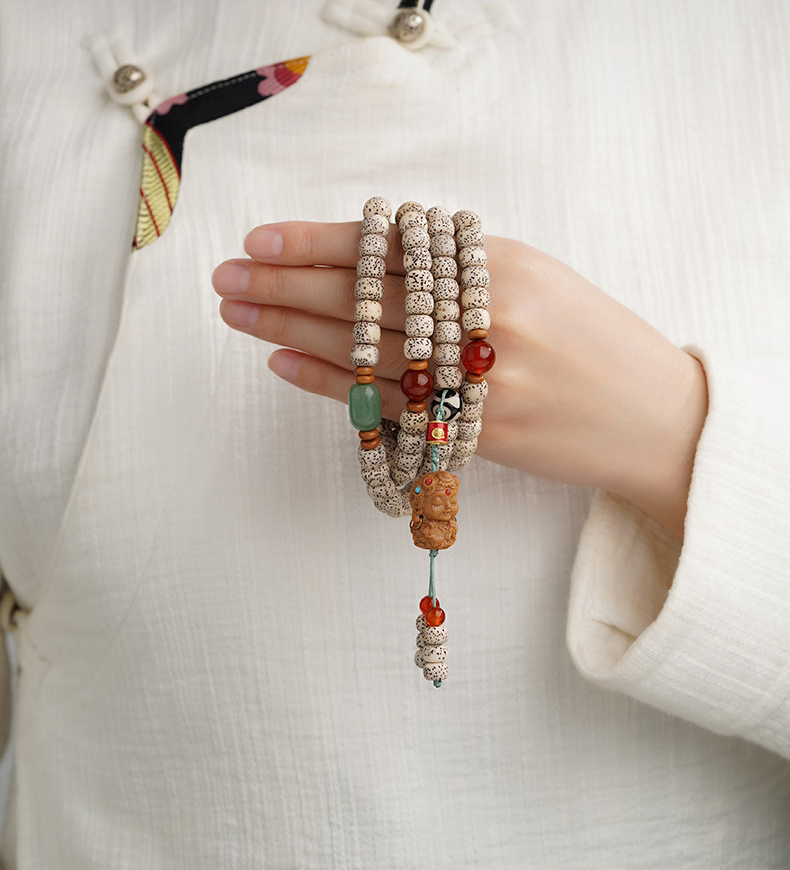
Star & Moon uses pale, dark-speckled barrel forms and contrasting accents. Turning Light follows pale flattened forms through small changes of red, green and gold tone. Compare those visible arrangements before choosing a name, a material association or an imagined outcome.
A useful question is not simply “Which is more calming?” Ask which form you can comfortably keep, handle and return to within the routine you already have. The textured-or-smooth guide gives a comparison method while separating photographed texture from a touch experience that has not been tested.
Separate strand length, wrist fit and decorative length
A long strand shown in several coils does not have a fixed number of comfortable wraps for every wrist. Bead diameter occupies space; tails and junctions change the arrangement. Compare the supplied dimensions with a piece that already fits you, and check which measurement includes the decoration. Avoid calculating a purchase from the photograph alone.
Elastic describes stretch in the cord. Adjustable describes a mechanism for changing the length. Neither word supplies an unstated maximum size or guarantees a necklace arrangement. A decorative ring or lock shape may have no working adjustment function. Use the elastic-versus-adjustable comparison and holding and wearing guide for the arrangement you intend.
Read material information beside the design story
Our current descriptions use supplier information and photographs. Listings distinguish that source from material identity, treatments, precise wood species, precious-metal fineness or origin that has not been independently verified. “Gold-tone” describes appearance; an eye pattern does not establish an antique dzi bead. Read the exact product's notes if a material detail matters to your decision.
The same care applies to names such as bodhi or a wood trade name. Ask what the seller actually knows. A clear photograph can show a pattern, a shape or a component's position; it cannot establish every composition or making claim. Browse Meditation Beads with those questions in mind.
Make the first pause ordinary
Choose a transition you recognize: closing a notebook, putting away your keys or beginning a quiet task. Arrive: support the strand and let your hands rest comfortably. Notice: observe a bead or a change in color, without forcing a breathing pattern. Return: name the ordinary action you want to take next.
There is no required duration or complete round for this contemporary exercise. You can stop after looking at one detail. It is separate from religious instruction and does not establish a health benefit of the jewelry. Our daily pause guide explains options for busy or anxious moments and the limits of a tactile reminder.
Choose a care routine you can maintain
Consider the whole piece: cord, finishes, spacers, carved parts and decorative ends. Store long strands in loose supported coils with tails separate. Avoid pulling a strand by a pendant or testing an unfamiliar finish with water or cleaners. Follow product-specific instructions and ask about anything essential that is missing.
Read care for mixed-material beaded jewelry. Then choose the more specific question in the reading groups below. Every guide has its own task, so you can go directly to the count, fit, shape or storage issue relevant to your piece.
Explore the questions within this guide
Choose the specific comparison you need. Each article returns to this guide and links to the relevant product form.
Choosing & Using
- How to Use Meditation Beads for a Daily Pause
- How to Hold and Wear Long Meditation Beads
- Textured or Smooth Meditation Beads
- Adjustable vs. Elastic Bead Strands
- Bead Strand Tassels and Tail Lengths
- What Does 108 Plus 6 Mean in Beads?
- Style a Multicolor Bead Tassel
- Elastic Bead Loops with Fixed Tails
- Lock Charms vs. Working Clasps
- Gourd-Shaped Meditation Bead Tails
- What Are Mala Beads? Meaning, Bead Counts & Everyday Use
Everyday Styling
- Purple Beads with Neutral Clothing
- Blue-Green Accents in Red Bead Strands
- Spool Shapes in Meditation Beads
- Speckled Beads with a Monochrome Collar
- Cream Disc Accents in Wood Strands
- Textured Beads with Smooth Teal Accents
- Pale-Green Endings on Black Strands